Why Radon Testing York County Homeowners Should Not Skip
Understanding the Radon Risk in York County
Living in York County means enjoying a mix of historic towns, farmland, and suburban neighborhoods. But beneath that landscape lies a geologic reality that many homeowners don't think about until it's too late. The area sits on a foundation of rock and soil that can release radon gas into homes through even tiny cracks. Radon is a radioactive gas that forms naturally when uranium in the ground breaks down. You cannot see it, smell it, or taste it. The only way to know if it is inside your home is to perform radon testing York County homes need on a regular basis.
I have spent years working with homeowners who assumed their house was safe because it was newer, or because their neighbor tested low. Neither assumption holds up. Radon levels can vary dramatically from one house to the next, even on the same street. The EPA has identified York County as a Zone 1 area, meaning it has the highest potential for elevated radon levels. That designation alone should push every homeowner toward radon testing York County residents can trust.
How Radon Gets Inside Your Home
Radon gas moves from the soil into the air pressure difference between the ground and your house. The lower pressure inside your home acts like a vacuum, pulling radon through any opening. Common radon entry points include cracks in concrete floors and walls, gaps around service pipes, floor drains, and the joint where the basement wall meets the floor. A crawl space can also be a major pathway because it is often unfinished and directly connected to the soil.
Once inside, radon can accumulate to dangerous levels, especially in lower areas like a basement. The gas decays into radioactive particles that, when inhaled, can damage lung tissue over time. The EPA estimates that radon causes about 21,000 lung cancer deaths per year in the United States. That number makes it the second leading cause of lung cancer after smoking. For non-smokers, it is the number one cause.
What a Radon Test Kit Can Tell You
A standard radon test kit is simple to use and relatively inexpensive. You place it in the lowest lived-in level of your home, leave it for the required time (usually 48 to 90 days for a long-term test), and mail it to a lab. The results come back as a number measured in picocuries per liter of air (pCi/L). The EPA action level is 4 pCi/L, meaning anything above that calls for a radon mitigation system. But even levels between 2 and 4 pCi/L carry some risk, and many homeowners choose to reduce them anyway.
Short-term tests can give you a quick snapshot, but they can be thrown off by weather, open windows, or recent renovations. A long-term test gives a more accurate average because it covers multiple seasons. If you are buying or selling a home, a short-term test is usually the standard. But for your own peace of mind, a long-term test is better.
Why Professional Radon Testing York County Matters
When I talk to homeowners about radon testing York County, I emphasize that a do-it-yourself test kit is a great starting point, but it is not the final word. Certified radon mitigators like Dan Jenkins have the training and equipment to conduct tests under controlled conditions. They know how to place the device away from drafts, heat sources, and humidity. They also understand how to interpret results in context. A professional test can identify conditions that might skew a home test, such as a radon mitigation system that is not working properly.
A manometer is a small gauge that tells you whether the fan unit in a mitigation system is creating enough suction. If the manometer reading is zero or too low, the system may not be pulling radon from beneath the slab. A certified radon mitigator checks these details during a post-mitigation test to confirm the system is performing as designed. That kind of expertise is hard to replicate with a mail-in kit alone.
What Happens If Your Radon Levels Are High
If your test shows levels above 4 pCi/L, you need a radon mitigation system. The most common and effective method for homes with a basement or crawl space is sub-slab depressurization. This involves drilling a small hole through the concrete floor, creating a suction point, and running PVC piping from that hole to a fan unit. The fan runs continuously, drawing radon gas from beneath the slab and venting it safely outside, above the roofline.
A properly installed system uses high-quality sealant around the piping and any visible cracks to prevent radon from finding another route inside. The fan unit itself is quiet and energy-efficient, usually drawing less power than a standard light bulb. The manometer mounted on the pipe gives you a quick visual check that the system is working. If the needle drops, you know something is wrong.
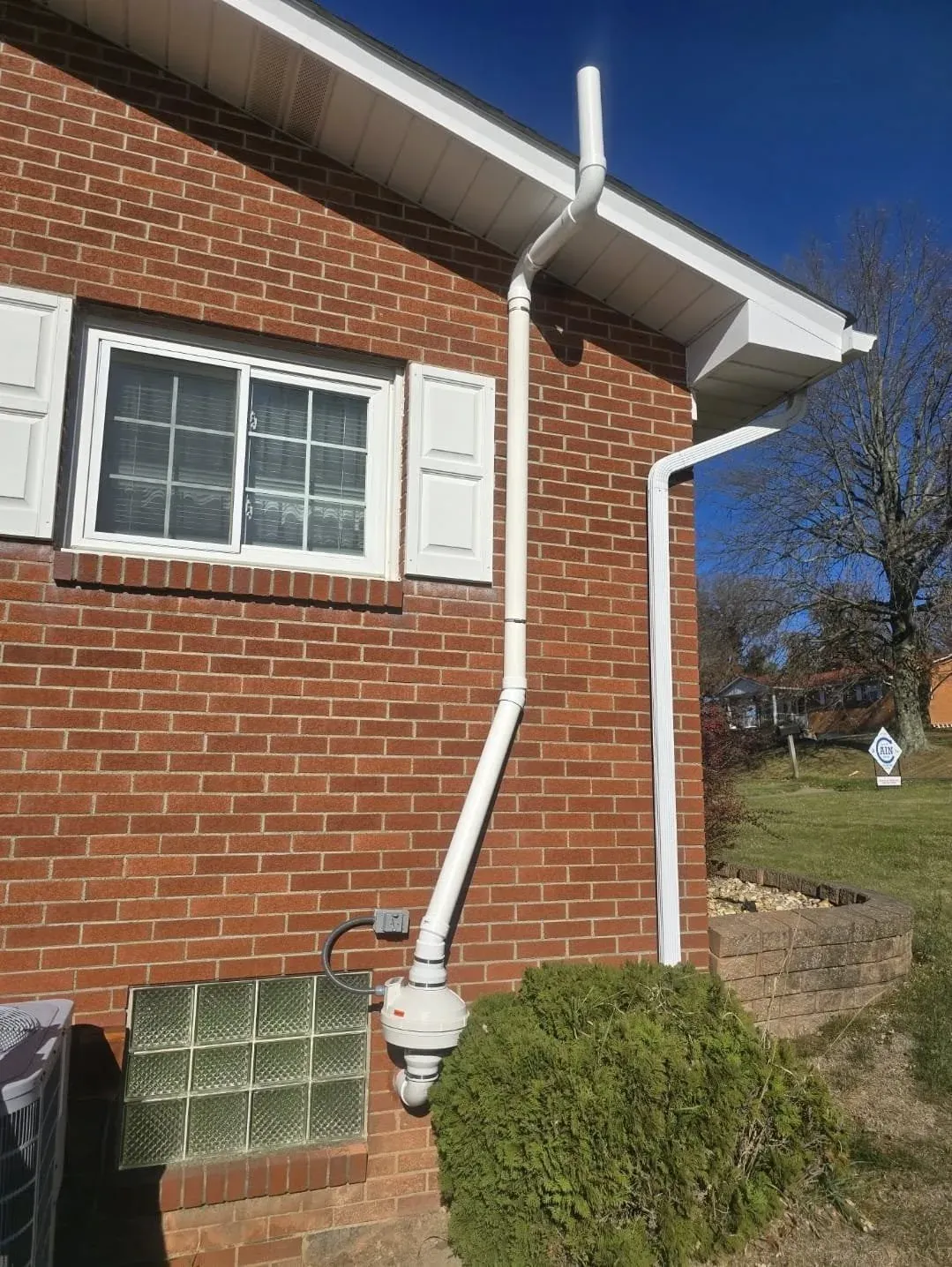
Post-mitigation test is the final step. After the system is installed, a second test confirms that radon levels have dropped below the action level. Most homeowners see levels fall well below 2 pCi/L after sub-slab depressurization. That test is your proof that the investment worked.
Choosing a Radon Contractor
Not every radon contractor is the same. Look for someone who is a certified radon mitigator and has experience with homes in Pennsylvania. The geology here is different from other parts of the country, and a local expert knows what works. Dan Jenkins, for example, has done hundreds of installations in York County and understands the specific challenges of the area, from shallow crawl spaces to finished basements.
Ask about transparent pricing. Some companies quote a low number and then add charges for materials, travel, or extra labor. A good radon contractor gives you a clear price upfront and explains what it includes. You should also ask about warranties on the fan unit and workmanship. Most quality systems come with a five-year warranty on the fan and a lifetime warranty on the piping.
Maintaining Your Radon Mitigation System
Once your radon mitigation system is in place, it requires very little maintenance. The fan unit runs 24/7, but it is designed to last many years. Check the manometer every few months to make sure the reading has not changed. If you see a drop, it could mean the fan has failed, the PVC piping has a leak, or the sealant around the slab has cracked. A quick call to your radon contractor can sort it out.
It is also wise to retest your home every two years or after any major renovation. Changes to the foundation, new additions, or even seismic activity can create new radon entry points. The Health Department in Pennsylvania recommends regular testing to stay ahead of the risk. Radon levels can also change over time as the soil settles or the water table shifts.
Final Thoughts on Radon in York County
Radon is not something to ignore. It is a real health hazard, but it is also one that can be measured and fixed. Start with radon testing York County homeowners can do themselves. If the results come back high, call a certified radon mitigator to install a system that will protect your family for decades. The cost of testing is small compared to the peace of mind you gain. And if you already have a system, do not forget to check that manometer and schedule a post-mitigation test every few years.
Living in Pennsylvania means living with radon potential. But with the right knowledge and the right help, you can make your home a safe place. That is what radon testing York County residents need to understand: it is not a scare tactic, it is a simple step toward a healthier home.